Ecdysterone or Laxogenin: What's the Difference
Ecdysterone and laxogenin often stand side by side in catalogs of 'natural anabolics'. However, one of them is a natural compound with a specific mechanism and several human studies, and the other a semi-synthetic molecule without clinical data. Our editorial team compared them in detail.
A brief portrait of the two substances
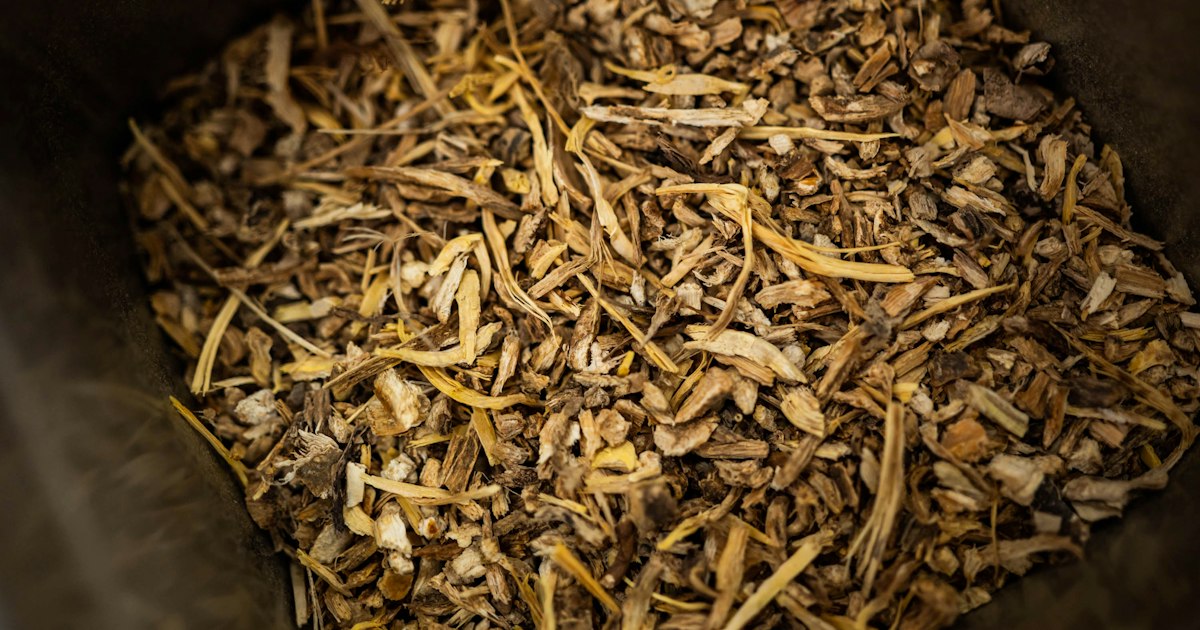
Ecdysterone (20-hydroxyecdysone, or beta-ecdysterone) is the most common phytoecdysteroid in nature. It is contained in spinach, quinoa, and asparagus, and in much higher concentrations in maral root (Rhaponticum carthamoides), cyanotis (Cyanotis vaga), and Brazilian ginseng (Pfaffia). In insects and crustaceans, similar compounds regulate molting, and in plants they probably deter herbivorous insects.
Laxogenin is a steroidal sapogenin of the spirostane series. In sports supplements its derivative 5α-hydroxylaxogenin usually appears, sold as a 'plant brassinosteroid'. In nature these compounds occur in trace amounts, so for commercial products they are obtained semi-synthetically from other plant steroids.
Both substances have a cyclopentanoperhydrophenanthrene skeleton characteristic of all steroids, and both are positioned as 'anabolics without hormonal side effects'. The similarity ends there.
Compared with laxogenin, ecdysterone is a much better-studied compound. There are dozens of preclinical works on it, several human studies, and even separate attention from anti-doping organizations. Let us examine the differences in more detail.
Structure and pharmacokinetics
Structurally, ecdysterone is distinguished by a large number of hydroxyl groups - there are six of them - and a keto group in ring B. This makes the molecule quite polar, which affects its absorption: the oral bioavailability of ecdysterone in humans is considered low, and a significant part of the substance is excreted in the urine unchanged or as metabolites.
It is precisely urinary excretion that allowed anti-doping laboratories to develop methods for detecting ecdysterone, and researchers from the Parr group use these methods to study its prevalence among athletes.
Laxogenin has a spirostane structure with a characteristic ketal system of rings E and F - the same as in diosgenin. It differs substantially from true brassinosteroids, which have a lactone ring B and a hydroxylated side chain. Our editorial team did not find data on the pharmacokinetics of laxogenin in humans in the peer-reviewed literature.
| Feature | Ecdysterone | 5α-hydroxylaxogenin |
|---|---|---|
| Class | Phytoecdysteroid | Spirostane sapogenin |
| Natural sources | Spinach, quinoa, maral root, cyanotis | Trace amounts; commercially - semi-synthesis |
| Pharmacokinetics in humans | Partially described, bioavailability low | Not described |
| WADA status | Monitoring Program | Not directly mentioned |
Mechanism: receptors and signaling pathways
For ecdysterone, the key question is through which receptor it acts in mammals, since we do not have an ecdysone receptor as insects do. The work of Parr et al. (2014) showed that the hypertrophic effect of ecdysterone in muscle cells is mediated by estrogen receptor beta. Gorelick-Feldman et al. (2008) demonstrated enhanced protein synthesis in myotubes, and other groups link the effect to the PI3K/Akt pathway.
It is important that ecdysterone does not bind to the androgen receptor and, according to the available data, does not suppress the production of one's own testosterone. That is precisely why it is called an 'unconventional anabolic agent'.
For laxogenin, no specific receptor or signaling pathway has been established. Proponents refer to the works of Esposito et al. (2011) with brassinosteroids, which activated Akt in the muscle cells of rats. However, laxogenin is not a brassinosteroid, and such conclusions for it are only assumptions.
So ecdysterone has at least a specific, testable mechanistic model, while laxogenin has only an analogy with a different class of compounds.
Human studies
The most cited human study of ecdysterone is the work of Isenmann et al. (2019), published in Archives of Toxicology. In it, men who trained for 10 weeks and took ecdysterone supplements gained more muscle mass and bench press strength than the placebo group; no significant changes in liver or kidney markers were found. The authors proposed including ecdysterone in the Prohibited List.
At the same time, an earlier study by Wilborn et al. (2006) found no effect of ecdysterone on body composition and strength in trained men. The discrepancies may be related to doses, product quality, and study duration. There are still few independent replications of the Isenmann result.
For laxogenin there are no published clinical studies. Any claims of a 'clinically proven' effect on labels are not backed by peer-reviewed publications.
Thus ecdysterone is at the stage of 'contradictory but interesting data', and laxogenin at the stage of 'no data'.
The anti-doping aspect and safety
Ecdysterone has been included in the WADA Monitoring Program since 2020. This means that it is not prohibited, but laboratories track its detection in samples to assess the scale of use. Such a status often precedes a decision to include a substance in the Prohibited List, although it does not guarantee it.
Laxogenin is not directly named in the WADA list. However, the S1 category 'other anabolic agents' has an open-ended formulation, and the athlete is responsible for any substance in a sample. Given the widespread contamination of supplements (Geyer et al., 2008), the risk for athletes is real.
As for safety: the review by Dinan and Lafont (2006) notes the low acute toxicity of ecdysteroids in mammals, and in the Isenmann study no significant changes in laboratory markers were recorded. For laxogenin there is no data on safety in humans.
- ecdysterone: safety partially studied in short-term studies, WADA monitoring;
- laxogenin: safety not studied, product composition unpredictable.
Editorial conclusions
Ecdysterone and laxogenin differ in origin, chemical structure, mechanism of action, and depth of study. Ecdysterone is a natural phytoecdysteroid with a described mechanism via ERβ and several human studies. Laxogenin is a semi-synthetic sapogenin without clinical data.
Neither substance is an androgen, but both fall within the sphere of attention of anti-doping organizations or contamination risks.
For the consumer, the difference comes down to this: about ecdysterone we know little, about laxogenin - almost nothing.
For practical advice on choosing, read the article 'Ecdysterone vs Laxogenin: What to Choose and for Whom'. We also recommend the materials 'Turkesterone or Laxogenin: What's the Difference' and a review of the WADA Monitoring Program.
References
- Isenmann E, Ambrosio G, Joseph JF, et al. Ecdysteroids as non-conventional anabolic agent: performance enhancement by ecdysterone supplementation in humans. Arch Toxicol. 2019;93(7):1807–1816.
- Parr MK, Zhao P, Haupt O, et al. Estrogen receptor beta is involved in skeletal muscle hypertrophy induced by the phytoecdysteroid ecdysterone. Mol Nutr Food Res. 2014;58(9):1861–1872.
- Wilborn CD, Taylor LW, Campbell BI, et al. Effects of methoxyisoflavone, ecdysterone, and sulfo-polysaccharide supplementation on training adaptations in resistance-trained males. J Int Soc Sports Nutr. 2006;3(2):19–27.
- Gorelick-Feldman J, Maclean D, Ilic N, et al. Phytoecdysteroids increase protein synthesis in skeletal muscle cells. J Agric Food Chem. 2008;56(10):3532–3537.
- Dinan L, Lafont R. Effects and applications of arthropod steroid hormones (ecdysteroids) in mammals. J Endocrinol. 2006;191(1):1–8.
- Esposito D, Komarnytsky S, Shapses S, Raskin I. Anabolic effect of plant brassinosteroid. FASEB J. 2011;25(10):3708–3719.
- World Anti-Doping Agency. The 2024 Monitoring Program. Montreal: WADA; 2024.
- Geyer H, Parr MK, Koehler K, et al. Nutritional supplements cross-contaminated and faked with doping substances. J Mass Spectrom. 2008;43(7):892–902.
Andriy Melnyk
A strength-sports coach and author of programs for beginner and intermediate levels. Writes about training planning.